

3,787 locally-led solutions ignited and supported
63,000 in-person engagements to strengthen communities
164 million people reached with trusted information
929 conflicts de-escalated or resolved
invested in peace across 34 countries
The Power of Peacebuilding in 2025
A Letter from Leadership
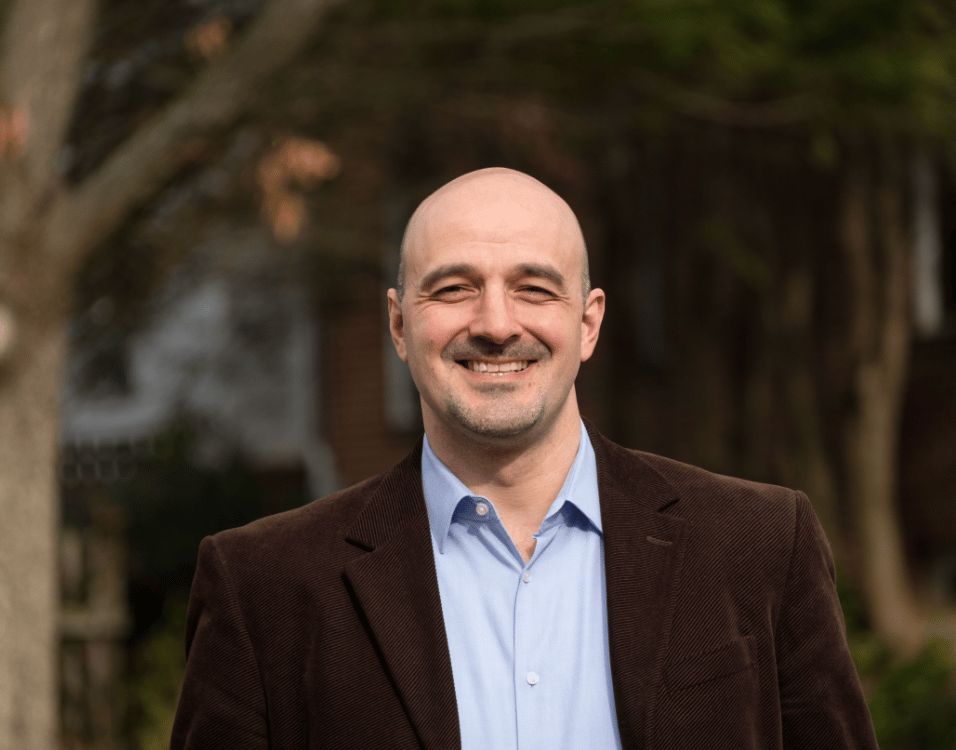
2025 did not just challenge the peacebuilding sector — it fractured it.
Foreign aid funding was cut at historic levels. Longstanding programs closed. Institutions designed to prevent violence weakened, even as conflict escalated across regions already under strain. Political violence remained at historically high levels, and more than 240,000 lives were lost to conflict-related violence. Civilians bore the greatest cost.
— Shamil Idriss
President & CEO
This was not a crisis confined to one region or one institution. It was, and remains, global, structural, and deeply interconnected.
And yet, 2025 also revealed something else.
Violence did not escalate everywhere it could have. In communities under extraordinary pressure, people intervened before tensions tipped into bloodshed. Local leaders chose reconciliation over retaliation. Journalists slowed the spread of hateful narratives, and young people organized alternatives to violence when formal systems failed.
Hope did not disappear. It took a beating to be sure, but it emerged anew in the initiative of people who refuse to give in to despair, gathered strength through their collective action, and, occasionally, broke through in the form of lasting change.
Through it all, a dawning recognition is surging worldwide: we are on an unsustainable and dangerous path and must find better ways to deal with our conflicts if we want to survive, let alone thrive.
This changing reality shaped our 2026–2030 Global Strategy, which is built for constrained resources, overlapping crises, and leadership systems struggling to keep pace with the scale of today’s challenges.
At its core is a simple conviction: adversarial, win-lose models are ill-suited to a world marked by profound interconnectivity and mutual vulnerability. We need leadership that mobilizes around what we are for, not just what we are against, that collaborates across differences, and that acts before crises become catastrophes.
At a moment when the need for peacebuilding is growing, and the resources to support it are under pressure, Search for Common Ground is focused on approaches that deliver real, measurable impact.
Enclosed, you will see evidence of violence prevented, escalation interrupted, and trust built — not under ideal conditions, but because people chose collective action when division carried too high a cost. You will also see how we measure what prevention makes possible, and how, with the right partnerships and sustained commitments, our efforts can be scaled to reach even more people and communities.
We are grateful to the donors, partners, staff, and community members whose trust and commitment make this work possible. In a year that tested so much, your support was not taken for granted—it was transformative.
The work ahead won’t be easy, but peace is possible, and leading together is the only way forward.
impact in action
In a world that’s more polarized than ever, our work is more important than ever. The impact is evident. Across the globe, where our colleagues and partners are currently involved, from Afghanistan to the U.S., data shows:
251.9% more people are influencing the issues they care about
Action is rising:
62% more people believe they can make a positive difference
agency is growing
Satisfaction with public services increased by 115.6%
Trust is strengthening:
In a year when overall conflict levels remained stubbornly high, preventing escalation became even more critical. Each dispute that did not spiral into mass violence meant fewer lives at risk and fewer families displaced. Containing tensions also stopped violence from spreading across borders and into adjacent communities, protecting fragile regions from cascading instability. Interventions prevented worse outcomes and avoided dangerous tipping points.
HOLDING THE LINE
SUDAN
By strategically deploying a 6-month social media intervention across Facebook, TikTok, Instagram, and X, Search for Common Ground reached over 896,000 people and successfully fortified the digital frontline against the drivers of communal violence in Sudan.
This campaign targeted hate speech and disinformation in high-tension regions. By grounding messages in the distinct cultural and linguistic contexts of Blue Nile and Kassala—states with diverse ethnic communities, histories of marginalization, and heightened vulnerability to rumor and manipulation—we were able to strengthen the credibility and reach of local peacebuilders amid widespread misinformation. This digital shield did more than mitigate harm; it reclaimed the narrative for peace, transforming online spaces from vectors of division into platforms for locally-led peace initiatives and social cohesion.
The impact of this intervention resonates as a vital bridge between digital safety and physical security, ensuring that grassroots resilience remains the dominant narrative in the Sudanese social fabric. By anchoring the campaign in the specific cultural contexts of Blue Nile and Kassala, we successfully amplified the agency of local peacebuilders over the noise of misinformation. This data-driven digital peacebuilding approach provides a scalable model for protecting communities from the real-world consequences of digital polarization.
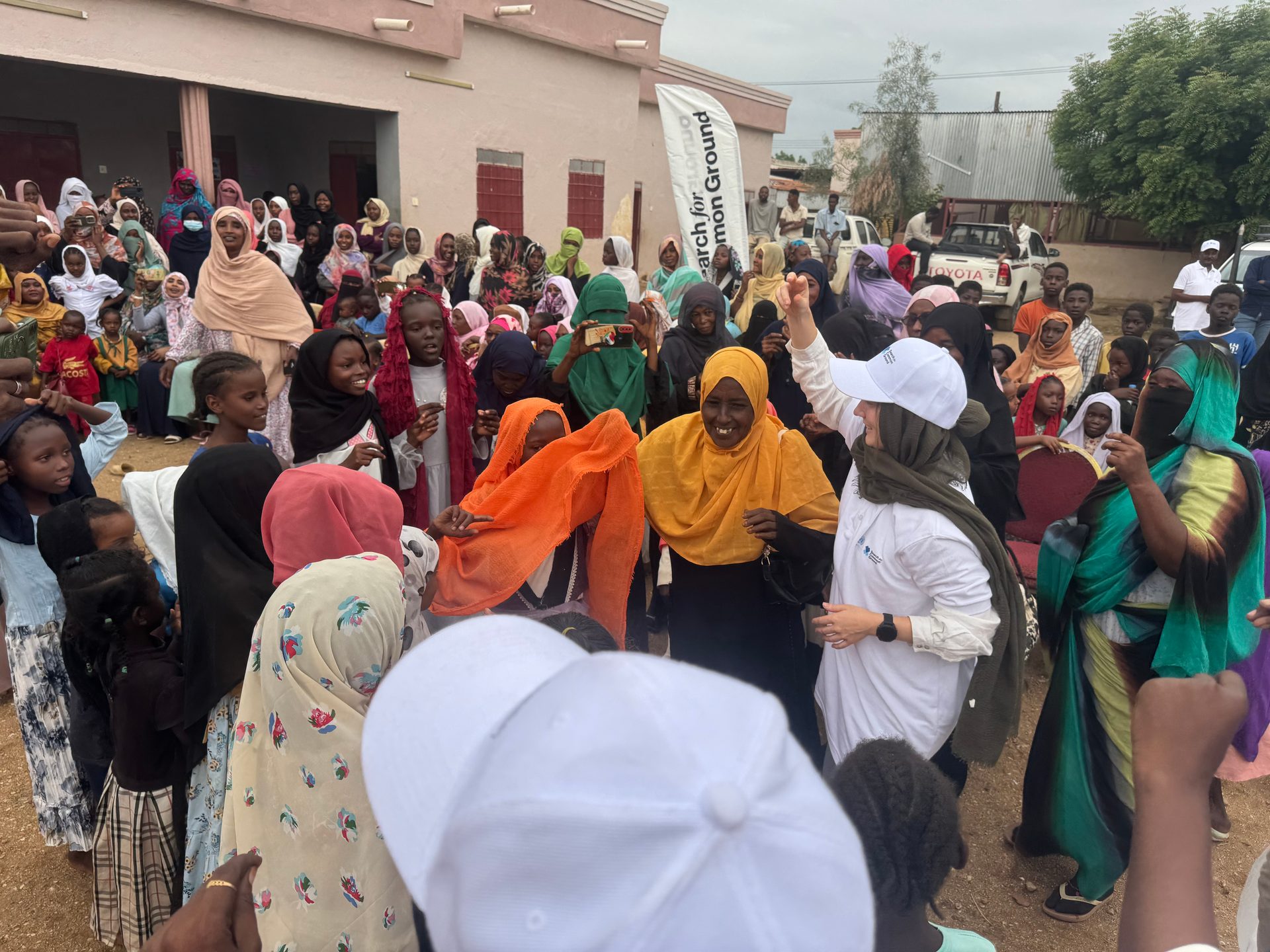
In January 2025, the United States formally declared that genocide was being committed in Sudan. By then, violence had torn through communities, institutions had fractured, and millions had been displaced. The war that began in April 2023 did more than disrupt daily life — it dismantled the systems meant to hold society together. And yet, people continued to lead.
More than 80 young men and women completed intensive training in business planning, management, peacebuilding, and conflict transformation. This equipped them not only to earn a living, but to lead responsibly in a fractured environment. The change was profound.
In February 2025, amid insecurity and economic breakdown, women and young people in South Kordofan launched several small businesses: hospital-adjacent restaurants, crop storage facilities, crop marketing initiatives, and consumer goods centers serving local markets. Because survival required more than endurance. It demanded coordination, trust, and choices that resisted collapse.
Digital Peacebuilding
When the System Broke, Communities Still Led
Digital Peacebuilding in sudan
KEY IMPACT METRICS
STRATEGIC PEACEBUILDING OUTCOMES
Reclaming the Narrative, Restoring Social Coohesion (6-Month Campaign)
Total Audience Reach Individuals
Mitimated online hate speech & mifoomertation
Centered community-led peace inttiatives initiatives
Safe digital spaces for dialogue
Active Engagements Meaningful Interactions
Port Sudan, Kassala, Blue Nile, S. Kordofan, Kharrioum
896,840
NEUTRALIZING CONFLICT TRIGGERS:
AMPLIFYING LOCAL AGENCY:
RESTORING SOCIAL COHEISION:
28,034
5 Affected States
Program Participant
Hiba Fathi
This wasn’t just about financial support — it was about transformation. We gained confidence, skills, and something even
more powerful: the understanding that empowerment is strongest when it is shared.

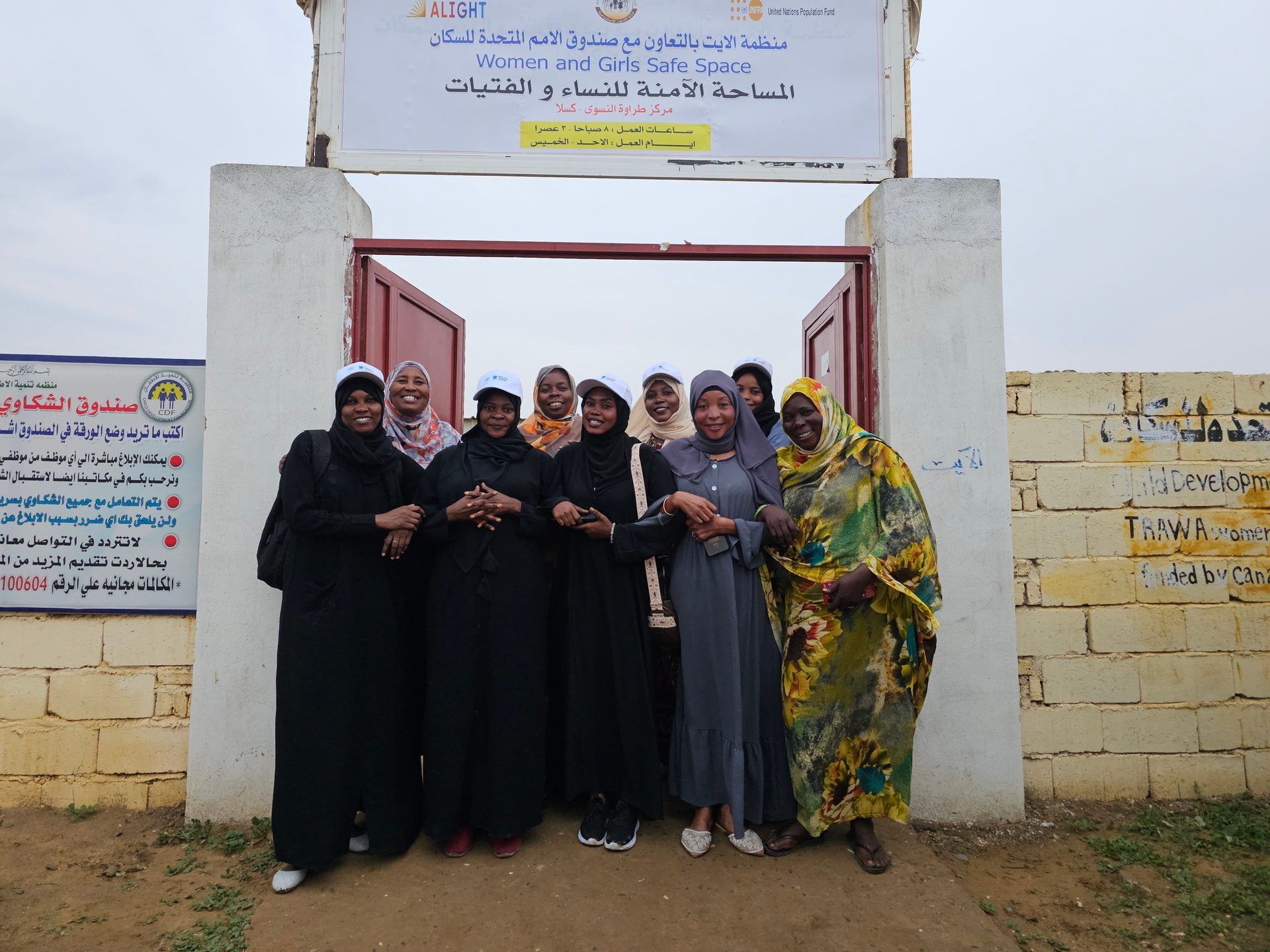
Across the country in Kassala State, peacebuilding took another form. Despite displacement and instability, women’s leadership and inter-communal solidarity was strengthened through media, culture, and public dialogue, empowering women to design and implement effective peacebuilding initiatives. Project participants are now translating their learning into sustainable community action.
One notable example is Nagat, a young woman from the Kadugli neighborhood in Kassala. After receiving training in conflict transformation and psychosocial support, she reported noticeable improvement in her own mental wellbeing and an increased ability to support others experiencing psychosocial stress within her community. Motivated by these positive outcomes, she produced an awareness video on social peace and youth engagement, and created a peer support group on WhatsApp where members can exchange ideas, address challenges, and promote psychosocial wellbeing. Through her engagement, Nagat has emerged as a trusted community advocate.
At the same time, participatory theatre funded by the UN Peacebuilding Fund transformed neighborhoods into forums for dialogue. Women and youth led conversations on girls’ education, gender discrimination, political participation, child marriage, and social cohesion. These were not passive performances. Community members debated, proposed solutions, and shared recordings beyond the stage, extending dialogue across the city.
The result was rare in such a fractured context: shared space, shared voice, and shared responsibility. None of this ended Sudan’s war. But in Kadugli and Kassala, peacebuilding took root in livelihoods, leadership, dialogue, and trust, all sustained through partnership and carried forward when formal systems faltered.
This is what it means to hold the line.
Inspired by the initiative, Hiba and her peers formed the White Hands Association, a women-led economic collective supporting other aspiring entrepreneurs. Their goal is simple and radical in today’s Sudan: that every woman involved can stand on her own feet and shape her future with confidence.
At the launch, Sudan’s Minister of Health and Social Development called the projects “an investment in self-reliance, peace, and a brighter future,” emphasizing that women and youth were not beneficiaries, but leaders.
In August 2025, Sudan’s Humanitarian Aid Commission praised the organization’s work as a model of collaboration between civil society and authorities during the crisis.
Empowering a New Generation of Leaders
When Borders Didn’t Become Battlefields
Peacebuilding works when it is preventive, locally-led, and continuous, even in geopolitically sensitive and historically violent border regions.
Central Asia
In March 2025, the presidents of Kyrgyzstan and Tajikistan signed a landmark agreement ending a century-long dispute over their shared border. The conflict had fueled decades of tension over land, water, and movement rights, and it erupted into violence in 2021 and 2022.
The agreement followed more than two years of sustained negotiations, and was a global win for diplomacy, proving that talking works better than fighting. But the breakthrough did not begin at the negotiating table.
While high-level talks unfolded, Search worked not only with political leaders, but with local peacebuilders, journalists, and activists on both sides to keep communication open and prevent renewed escalation. Community leaders, who once addressed land and resource disputes prior to the violence, remained hopeful for the border dispute resolution, and expert groups helped government leaders understand the real human cost of war.
This deal brings peace to one of the most densely populated regions in the world. It fosters stronger relationships between neighbors, with a future built on cooperation, not conflict. And with open borders, trade and business can thrive.
Ultimately, the agreement succeeded not through headlines or military intervention. This was peace built quietly and persistently. It relied on trust, and on people willing to sustain dialogue when political tensions ran high. It was the culmination of years of holding the line — and holding hope.
After 101 Years, Peace Prevails at the Border
Afghanistan
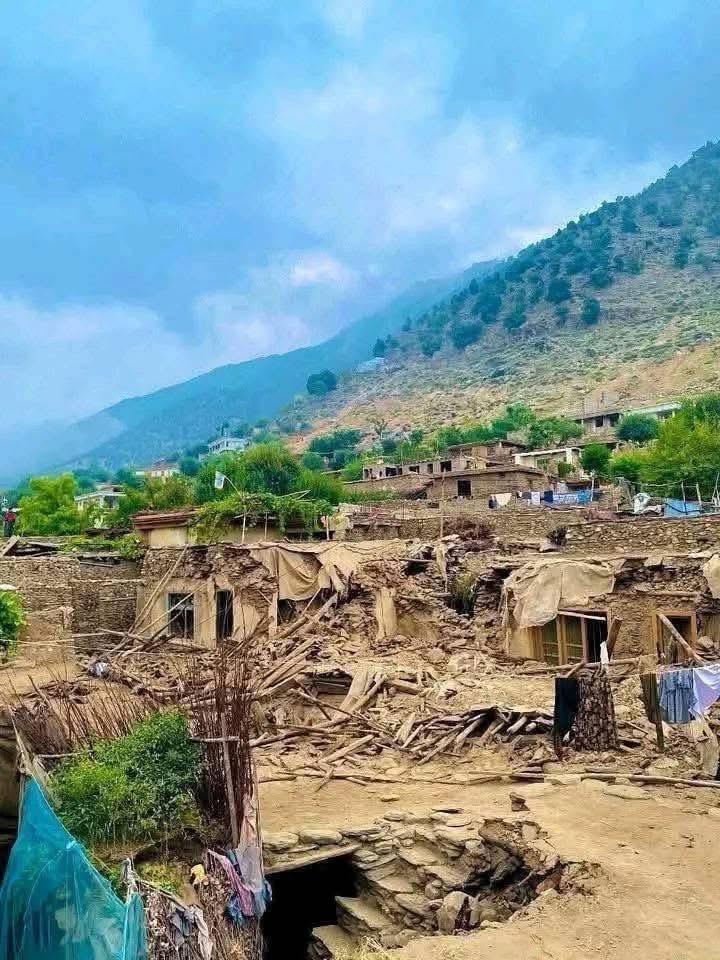
In September 2025, eastern Afghanistan was already stretched to the breaking point. Then, the ground collapsed.
Two powerful earthquakes struck the area, flattening homes and burying families beneath rubble. Nearly 2,000 people were confirmed dead, and the number continued to rise. Entire neighborhoods were left without shelter, warmth, or medical care. For those who survived the initial tremors, the crisis did not end when the shaking stopped.
Within hours, local teams and trusted community networks mobilized to deliver 350 empathy kits to those in need. These kits were not symbolic — they were lifesaving. Each kit included bedding and clothing to protect families sleeping outdoors or in damaged homes, and reusable sanitary supplies to promote health and preserve dignity for women and girls in crisis.
The kits provided essential care, but for communities stripped of control, they also meant presence — and the knowledge that someone had not forgotten them. Beyond the kits, team members provided trauma and psychosocial care to help families process shock, grief, and loss.
Showing Up After the Ground Gave Way
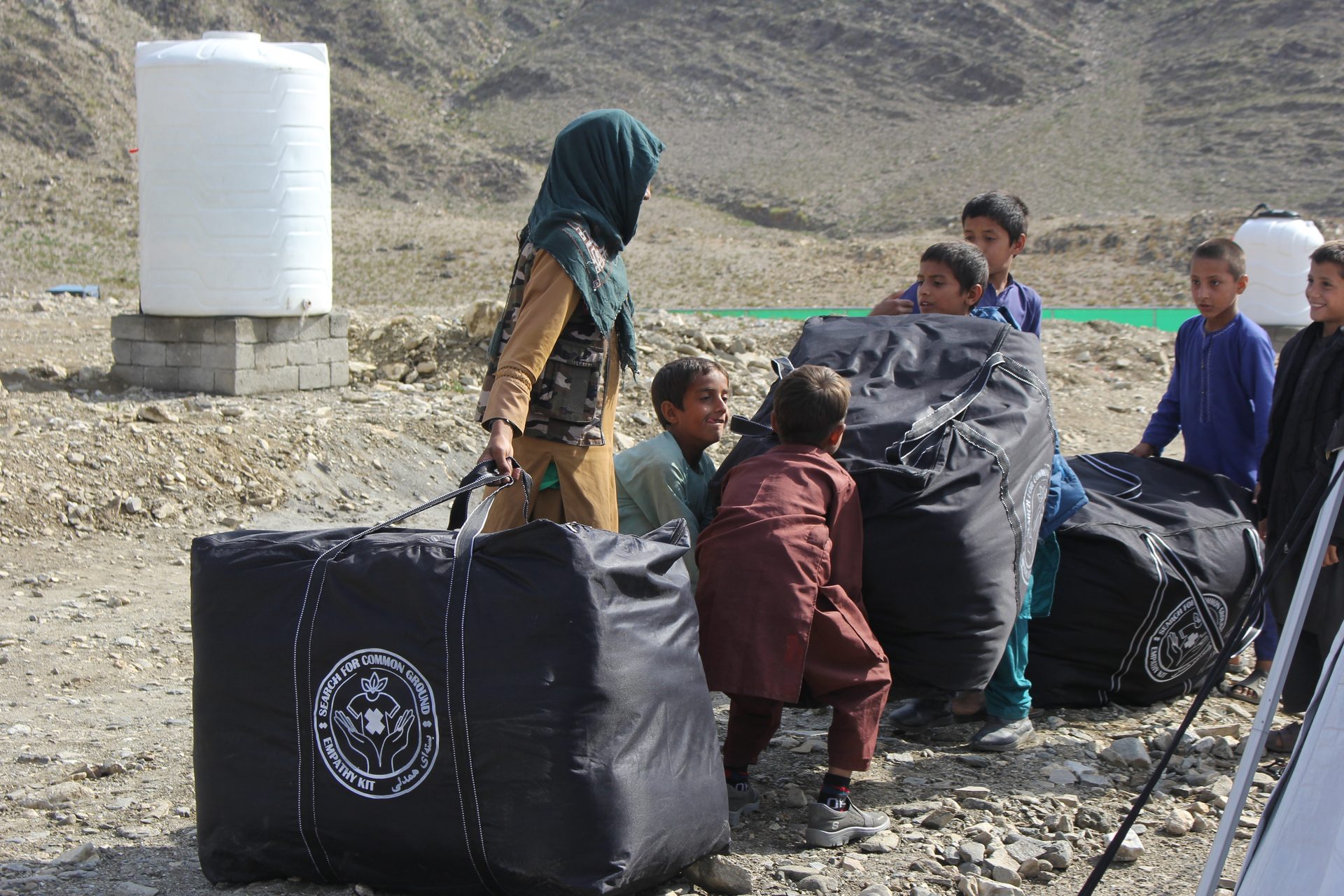
This rapid response was possible because our colleagues and partners had already invested in local communities, funding women-led businesses in the Central Highlands of Afghanistan to produce winterization kits. The investment was twofold: it sustained livelihoods on the front end and saved lives on the back end.
In the aftermath of the earthquakes, it was not large systems that moved fastest. It was trusted local networks. As international attention shifted and aftershocks continued, teams remained on the ground delivering support, coordinating care, and responding to rapidly evolving needs.
In the days that followed, the search for survivors gave way to something quieter and harder: rebuilding life amid loss. Families faced nights without shelter. Children slept surrounded by fear and grief. The news cycle moved on, but Afghanistan did not.
This work did not undo the earthquakes. But in a moment defined by collapse, the empathy kits delivered essential care, when the absence of such care could have been fatal.
In Afghanistan, peacebuilding after the disaster did not look like negotiations or long-term plans. It looked like showing up — immediately, locally, and humanely — when the ground itself gave way.
Trust Is an Investment
After the Headlines Faded
The Frontline Is Global, and Local
Peacebuilding is global, but it’s not foreign. Every conflict and peace effort impacts a local community, and the tools that prevent violence abroad are the same ones that hold societies together at home — wherever one’s home may be.
Israel & Palestine
In January 2025, after more than a two years of devastating violence, a ceasefire between Israel and Hamas was announced. For many, it brought a fragile sense of relief. For others, it arrived too late, after tens of thousands had been killed, communities destroyed, and trust shattered. The ceasefire was not an end to the conflict, but a narrow opening: a chance to pause, to mourn, and to decide whether the future would look different from the past.
Our colleagues and partners are ready to meet the moment.
In the weeks following the announcement, leaders and partners focused not only on sustaining the ceasefire, but on the harder question: what comes next?
At the Wilson Center in Washington D.C., Search Israel and Palestine country directors joined experts from the Georgetown Institute for Women, Peace, and Security, and the European Institute of Peace to examine why ceasefires so often fail to translate into lasting peace. The discussion was grounded in a sobering reality: women are largely left out of ceasefire negotiations. In Israel and Palestine, political violence against women persists, and formal peace processes exclude the civic leaders closest to the ground.
Our Palestine country director spoke candidly about the risks women face when stepping into peacebuilding roles, from protection threats to economic precarity, and cautioned against treating inclusion as symbolic. Peace, she argued, cannot be built only by those who are already safe, visible, and resourced. Our Israel country director highlighted a generational gap among women leaders and emphasized the need for physical spaces where women can convene, organize, and build partnerships across divides. The message was clear: without broad-based inclusion, ceasefires won’t endure.
These principles came to life in Jerusalem in May 2025. As war continued to dominate political discourse, more than 60 Israeli peace organizations — many of whom had historically emphasized their differences — came together to form the It’s Time peacebuilding coalition. Search joined the coalition’s steering committee, helping to shape strategy and decision-making at every level. The coalition’s message was explicit and unified: an immediate ceasefire, an end to occupation, and a peace agreement based on a two-state solution.
At the People’s Peace Summit in Jerusalem, our colleagues and partners facilitated central panels and highlighted concrete political initiatives, and Israelis and Palestinians came together to speak about loss, accountability, and the long road ahead.
Because Palestinian partners were unable to travel freely, our colleagues and partners organized watch parties in the West Bank, ensuring participation across borders despite restrictions. At the same time, early work began to quietly and cautiously explore the formation of a parallel coalition in Palestine. For the first time in months, Israeli media began to cover these efforts.
As international recognition of Palestine gained momentum later in the year, Search and other members of the It’s Time coalition traveled to Ramallah to meet with President Mahmoud Abbas against the backdrop of the fragile ceasefire. President Abbas amplified a message rarely heard in Israeli political discourse: that Palestinian statehood is not a threat, but a pathway to security for both peoples. “Every Israeli who believes in peace is our brother,” he said. The meeting underscored a central truth that political agreements cannot endure without civic legitimacy.
By September 2025, the UN Independent International Commission of Inquiry concluded that Israel had committed acts of genocide against Palestinians in Gaza, a finding that intensified global scrutiny and polarization. In that environment, Search’s role was not to simplify the conflict or claim resolution. It was to hold political and civic space open for dialogue, for accountability, and for leadership willing to take risks for peace rather than power.
Through global engagement with political leaders, sustained support for women’s participation, and investment in coalitions that crossed ideological and national lines, our colleagues and partners worked to ensure that the ceasefire wasn’t the end, but the beginning. Such peacebuilding efforts are based not on agreement or certainty, but on persistence, courage, and a refusal to let war close the door on a shared future.
Beyond the Ceasefire
What comes next?
When Civil Society Refused to Fragment
Political Courage in a Fragile Moment
Holding the Line on Leadership
When Communities Refused
to Let Violence Decide
When individuals and communities are empowered, peace becomes a choice, one that can be replicated through informed decision-making, listening, and empathy.
MALI
In parts of Mali, tensions shaped by competition over land, identity, and security have too often escalated into violence before dialogue could begin. Mistrust between communities hardened into expectation, so violence was not just likely, but inevitable.
In 2025, our colleagues and our partners placed empowerment at the center of our approach, enabling vulnerable groups to become agents of change. Search worked with local leaders, elders, women, and youth in several high-risk communities to facilitate reconciliation processes designed to interrupt cycles of blame and fear. These were not symbolic meetings. They were difficult conversations, held in places where recent violence had made trust fragile and silence safer than speaking.
Violence moves quickly. Communication must be quicker.
Strengthening Agency and Reducing Polarization
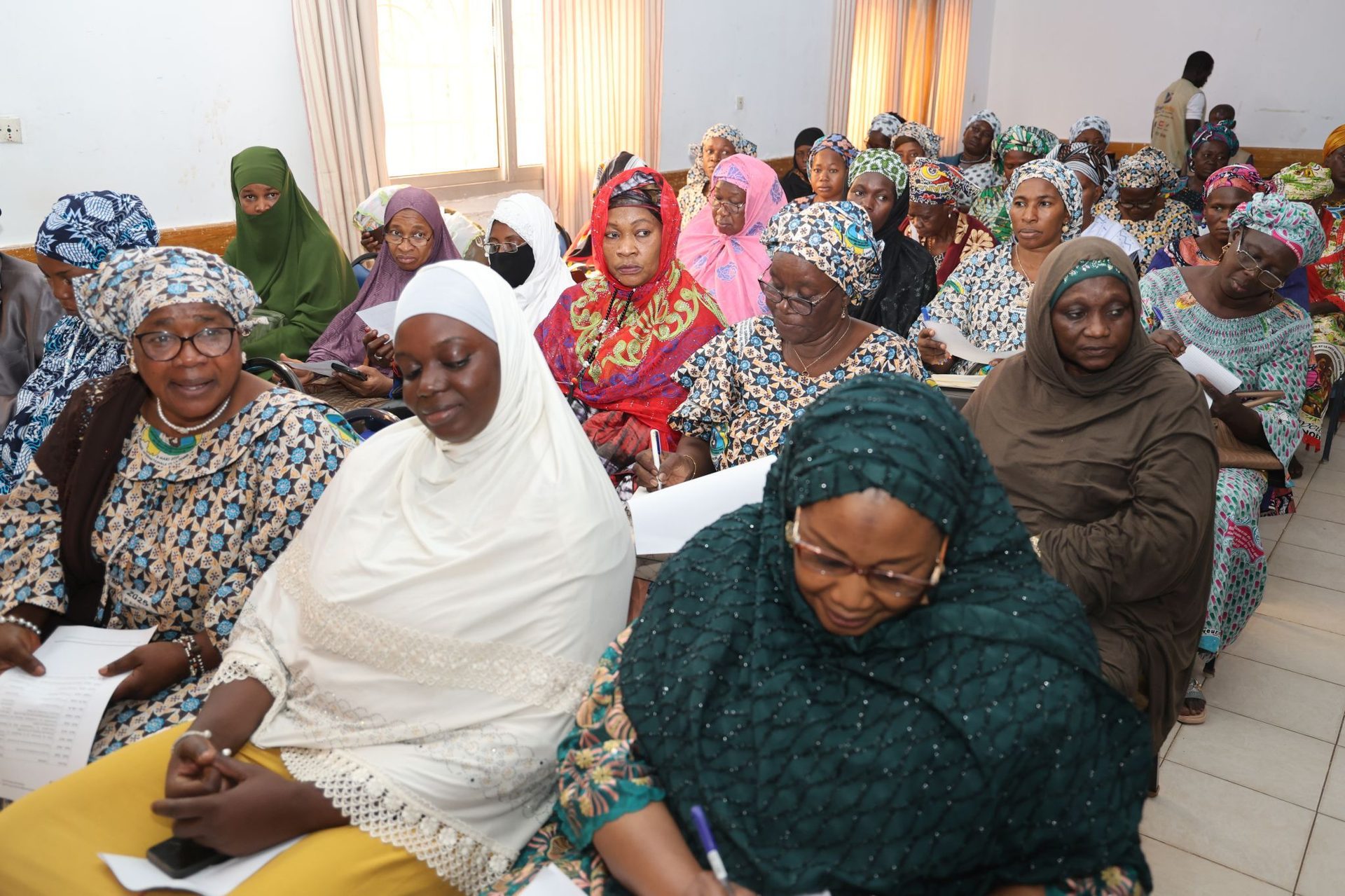
Participants spoke openly about loss, anger, and fear, but also about the cost of continued division. Through dialogue and joint problem-solving, communities identified shared priorities and agreed on practical steps to prevent future escalation, including mechanisms for early communication when tensions arose. What followed was not a dramatic transformation. It was something quieter — and more consequential.
Attitudes shifted. Participants reported greater willingness to engage with people from other communities, and a reduced acceptance of violence as a legitimate way to resolve disputes. Local leaders who had once avoided contact began coordinating responses to emerging tensions. Rumors that might previously have sparked retaliation were addressed before they spread. In a context where violence often accelerates rapidly, restraint became a collective choice.
These efforts did not eliminate conflict; they changed how conflict was handled. They replaced escalation with communication and turned isolation into shared responsibility. Importantly, peace wasn’t brokered by a few — it was built through repeated decisions by many. Decisions to speak, to listen, and to intervene before harm became inevitable.
of identified rumors neutralized, preventing violence before it started
83%
people reached through traditional and digital media campaigns
Over
11.4 Million
people directly reached nationwide
Over
87,000
civil society members, including journalists, administrative authorities, artists, and digital platform administrators, strengthened to act
502
youth influencers trained
240
community peace initiatives implemented
69
community initiatives funded
60
Peacebuilding impact is often measured by what doesn’t happen — violence that doesn’t escalate, harm that is avoided, futures that remain possible. Search for Common Ground’s Impact Calculator makes prevention visible by measuring the real value of our Peace Impact Framework.
The Peace Impact Framework in Action
Intercommunal violence was prevented, preserving lives, livelihoods, and social cohesion.

Communities coordinated responses and engaged local authorities more constructively, increasing trust.

Negative attitudes and behaviors were directly reduced across ethnic and community divides, a core driver of violence in Mali.
Community members — including elders, women, and youth — facilitated dialogue, identifying shared priorities, and intervening early when tensions emerged.

Participants rejected violence in favor of dialogue and coordinated prevention as a means of resolving disputes.
The choices made in these communities reflected measurable prevention, where reduced polarization, early intervention, and cooperation among local leadership combined to stop violence before it started.
Stopping Violence Before It Starts
Picking up the pieces is too often a necessary reality following acts of violence. Preventing violence from occurring is the first and most important line of defense, with ripple effects that go well beyond single incidents.
Nigeria
The people in Kajuru, a town in southern Kaduna State, know how quickly a rumor can turn deadly. The area has a long history of religious and ethnic violence between farming and herding communities. When allegations surfaced that grazing land had been poisoned, killing several cows, anger spread fast. Some members of the Fulani community began preparing to retaliate, while others warned that if the situation wasn’t addressed immediately, violence would follow.
This was the moment Aliyu Abubakar stepped in. He is a 35-year-old local government worker, a member of the chiefdom council, and a participant in our strategic action program. He recognized the warning signs immediately because he had been trained to see them. So rather than taking sides or allowing rumors to escalate, Aliyu acted.
He brought the issue directly to the Sarki (traditional leader), who referred the case to the police for investigation. At the same time, Aliyu helped convene dialogue between Fulani and Adara leaders, and he engaged local authorities and security agencies to slow the situation down before it spiraled out of control.
The Day That Violence Didn’t Happen
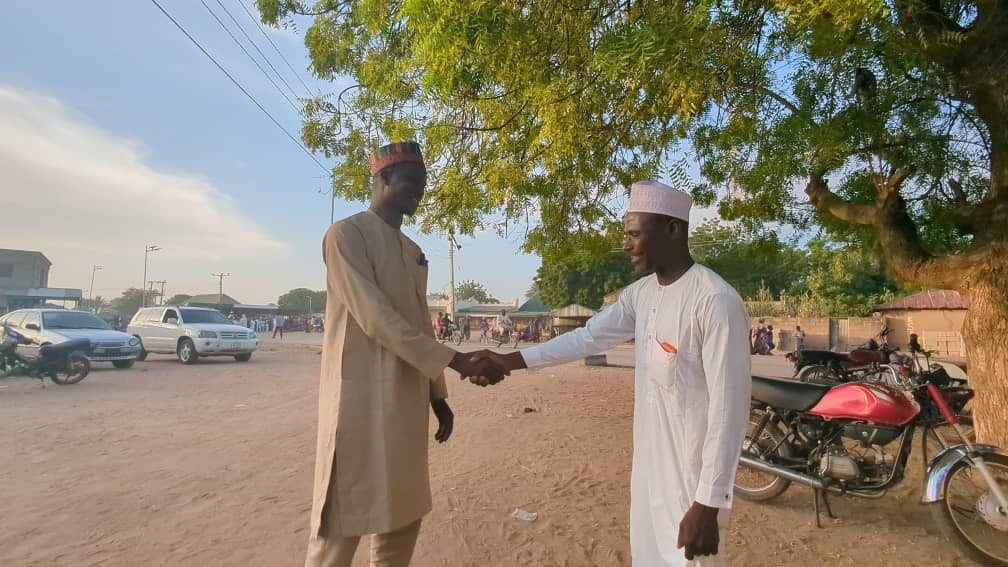
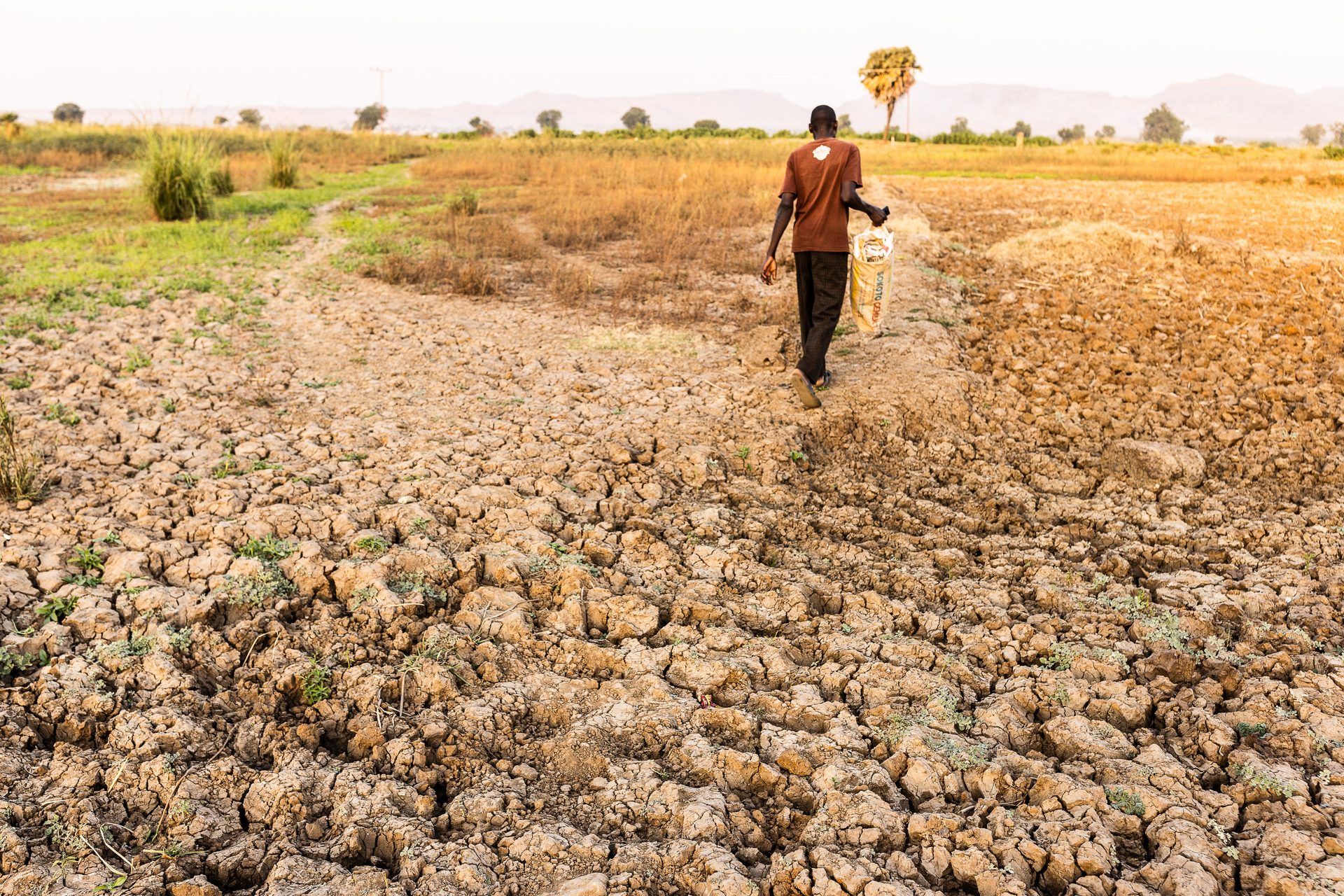
Without that training, things could have gotten out of hand very fast.
Aliyu

The investigation is ongoing. But something critical already changed: retaliation was averted, tensions eased, and community representatives continued to meet. People who were preparing for violence chose restraint instead.
In places like Kajuru, peace doesn’t arrive with headlines. It arrives quietly, when someone recognizes a moment of danger and has the skills, trust, and backing to intervene. Investments in peacebuilding make these outcomes possible.
By the end of 2024, something rare was happening in Nigeria’s Middle Belt.
In communities long shaped by violent clashes between Muslim herders and Christian farmers, violence was declining. Trust between civilians and security forces, while fragile, was beginning to take hold. That’s because, for four years, Search had been operating a community-based early warning and response system across parts of Benue State, including Yelwata. Trained community observers monitored warning signs of escalation — rumors, movements, and local threats — and reported them through a dedicated platform.
Staff worked with religious leaders, community representatives, and security actors to interpret alerts and coordinate preventive responses, including mediation and targeted security engagement. These dialogues created channels for communication that had not existed before, allowing concerns to be addressed before tensions escalated. The approach was grounded in evidence, and the data showed it was working.
By late 2024, Search and the Benue State government were preparing for the final phase of the program: a structured handover of the early warning platform to state authorities. Prevention would not just be an external intervention, but a locally owned public good.
Then, in January 2025, the program came to an abrupt halt.
Following the collapse of the U.S. Agency for International Development, thousands of peace and prevention initiatives worldwide were terminated. In Nigeria alone, nearly $180 million in U.S.-funded programs were canceled, including the violence prevention platform in Benue State.
The early warning system went offline, staff were laid off or reassigned, and the planned transition to state ownership stopped. Communities lost the mechanism that had helped them escalate risks and convene timely responses.
When Prevention Was Interrupted
Between 2022 and 2024:
Violent incidents between farmers and herders declined from 102 to 61
2022
2024
Casualties fell from 619 to 467
2022
2024
We had an early warning system in place, but now, we’re operating blind.
West Africa Regional Program Manager
Bryan weiner
In June 2025, five months after the program ended, Yelwata experienced a devastating attack. Armed assailants killed roughly 200 people, destroyed homes and market stalls, and displaced nearly 4,000 residents. By the time security forces arrived, it was too late.
Community members had reported warning signs in the days leading up to the violence. But without an operational platform or dedicated staff, those alerts were not escalated or acted upon in a coordinated way.
According to Devex: “What happened in Yelwata was a tragedy, but not an isolated one. Months after USAID’s closure, communities once buoyed by U.S.-funded projects are still feeling the void — in rising tensions, dwindling services, and a growing sense of abandonment.”
Additional violence soon occurred in parts of Nigeria’s Middle Belt — including during the Christmas season — underscoring how quickly insecurity can return when preventive systems are absent.
This example doesn’t show that prevention failed. It shows that prevention was working — and then was interrupted. The early warning system did not eliminate violence. But it reduced incidents, saved lives, and reached the point where the local government was prepared to assume responsibility. That handover didn’t happen.
As one community leader reflected, “If they don’t come back, our hope of being safe is not there.” Holding hope requires sustained peacebuilding efforts to deliver what matters most; the outcomes are measurable.
Peacebuilding impact is often measured by what doesn’t happen — violence that doesn’t escalate, harm that is avoided, futures that remain possible. Search for Common Ground’s Impact Calculator makes prevention visible by measuring the real value of our Peace Impact Framework.
Nigeria demonstrates the cost of discontinuity: when peace infrastructure disappears, risk rises.
Trust between civilians and security institutions grew through consistent engagement — and eroded when it stopped.
Dialogue and mediation reduced escalation between herder and farmer communities.
Communities identified and reported warning signs even after formal support ended.
Data shows fewer incidents and casualties while prevention mechanisms were active.

The Peace Impact Framework in Action
When Polarization Becomes Political Violence
United states
America feels more divided than ever in our lifetime. Partisan extremism flourishes on social media and influences our politics, exaggerating our differences and weakening our ability to face crises. Our Common Ground USA colleagues and partners focus on our trickiest problems in the U.S.–from how to reconcile with our past, to how to build a violence-free politics in our future.
Working with peacebuilders who go by other names–faith leaders, university administrators, union organizers and business entrepreneurs, government public servants, cultural icons in sports, arts, music, and everyday leaders who hold their communities together–we interrupt cycles of political violence through deep prevention and an agile rapid-response.
In 2025, the CG-USA addressed incidents of high-profile political violence in the United States. Building on what we know works to bring people together and prevents harm: Within hours of major events, the team mobilized to provide clear, values-driven guidance that helped communities move from fear toward constructive action.
Our colleagues and partners stepped in to advise local leaders, amplify bipartisan condemnations of violence, and equip networks with practical tools to process trauma and prevent escalation. These resources enabled communities across multiple states to respond without deepening division.
Crucially, our approach converts crisis response into sustained resilience–strengthening state-level networks, supporting bridge-building initiatives, and becoming a trusted national advisor on best practices for preventing political violence. This is vital in a large, diverse democracy where collaborative leadership matters more than ever.
The program works. According to a national pulse survey based on the Peace Impact Framework, affective polarization is worsening across the country. But people working with our teams are experiencing the opposite, and report significant increases in building trusted and effective relationships across lines of difference and confidence in this leading to real outcomes. Our work serves the dual purpose of interrupting violence and demonstrating how dealing constructively with differences can enable communities to not just survive, but thrive, together.
Transforming Crisis into Resilience
people reached via digital campaigns
million
11
people reached via digital campaigns
million
11
in-person activities, including mentorship and training
50
in-person activities, including mentorship and training
50
community-led initiatives
24
community-led initiatives
24
people reached via digital campaigns
million
11
50
in-person activities, including mentorship and training
community-led initiatives
24
2025 once again underscored the futility of war in the modern world. War is not producing lasting safety. Not for those who wage it. Not for those caught inside it. Not for the world around it.
In a deeply interconnected and mutually vulnerable world, win-lose approaches do not hold. They fracture systems, prolong instability, and create conditions for future conflict. A stable and enduring world can only be built through negotiated agreements, shared incentives, and an unwavering commitment to nonviolent approaches to conflict.
War cannot deliver what it promises.
01
Power has changed and peacebuilding must change with it.
The distance between authority and influence is widening. Peace cannot be built through institutions alone. It must be built across the full ecosystem of influence.
That means fostering the politics and the culture of peace. Mobilizing across generations. Using technology to improve our world without compromising human dignity. The future of peacebuilding is not top-down. It is distributed.
02
For much of recent history, violence has been declining. That is no longer the case. Polarization, dehumanization, and violence have accelerated. Reversing this terrible trajectory is daunting when faced with daily headlines of civilian death tolls and hostile rhetoric from leaders. If we are to hold onto our humanity, we must pause to acknowledge and grieve the human cost of these crises. Not abstract, but constant, visible, and heavy.
And if we are to be true to our mission, we must pick ourselves up and redouble our efforts to create a more peaceful world. The greatest source of strength and solidarity–both in the mourning and in the mobilizing–is our ever-growing global network of peers, partners, and supporters, which together will one day turn the tide.
Hope is harder and more necessary than it has ever been.
03
Lessons Learned
PATH FORWARD
THE
The learnings from 2025 have shaped our 2026-2030 Global Strategy. It’s now clearer than ever: we must strengthen long-term partnerships in the world’s most divided places and equip leaders to work across lines of identity and ideology. By doing this, we’ll shift how societies respond to conflict, and we’ll set a new norm for how change is led.
Search will accelerate the emergence of collaborative leaders who drive change across dividing lines. Over the next five years, we will:
In the process, we will accelerate the emergence of a new kind of leadership reflected in public sector decision makers and private sector executives, youth advocates and community organizers, teachers, faith leaders and the families, neighbors and communities they serve–who will make peace a sustainable reality by grounding it in collaborative problem-solving and meaningful trust-building.
Improve the dignity and safety of 200 million people across the world.
Mobilize one million leaders to embrace and promote a collaborative model of leadership.
Expand the power of 40 million people to influence the decisions that affect them and their communities.
Allocating resources toward cooperative rather than coercive conflict resolution.
Investments

Strengthening trust and accountability of the institutions that govern and serve people.
Legitimacy

Strengthening trust across communal dividing lines.
Polarization

Reducing levels of physical violence.
Violence

Building people’s confidence, capacity & willingness to take action on issues that concern them.
Agency

Investing in Peace Peacebuilding impact is often measured by what doesn’t happen — violence that doesn’t escalate, harm that is avoided, futures that remain possible. Search for Common Ground’s Impact Calculator makes prevention visible by 5 vital signs of societal health.
Investing in Peace
Investment is critical for building durable local peace infrastructure, not just one-time interventions.
- 430 young people and women who believe they can make a difference
- 108 people feeling safer in their daily lives
- 40 people gaining credible civic information
- 5 trained community mediators
- Multiple local leaders equipped to intervene before conflict starts
A $1,000 investment in peace CAN return:
- 115 people who feel less dehumanized and more understood
- 44 young people taking action across divides to improve their lives
- 10 people identifying and responding to misinformation and hate speech
- 5 people becoming better represented by their leaders
- Training for local leaders and community mediators
- Ongoing conflict prevention activity in high-risk areas
A $100 investment in peace can return: